Friday, September 16, 2016

Day 16: Limits of Spec

We're back, and we're writing for two days today. First up, we're back to talking about the speculative element in Trinary (or at least the one I've developed most during this exercise); the jump-drive.


I'm going to let Bryant introduce this one...

You might wonder why I'm asking you to spend so much time on this. Well, if you look at the most common weaknesses in fantasy and science fiction, you'll find that people dislike unbelievability. Now, a spec fiction audience will believe a lot. They're willing to believe in dragons, elves, magic, faster-than-light travel, ansibles, warp drive, transporters, holodecks, teleportation, ghosts, werewolves, vampires, and even God, for the purposes of enjoying the story.
But as soon as the rules are broken-- as soon as people stop acting like people, or the warp drive only works when the hero needs to shorten the time spent traveling to the Bad Guy's hideout, but fails once he needs to make a getaway-- as soon as something inconsistent happens in your story, you lose your reader. They'll stop reading, or at the very least they'll stop believing, and that is death to your story. 
Makes sense. Which brings us to today's task:
What are the limits of your speculative element? What's the trade-off for using it? Magic usually comes at a cost-- what is that cost? If there's no cost, then what's the trade-off? What keeps it from being used all the time, for everything, or is it used that much after all? What keeps people from spending every hour in the holodeck? Why would anyone bother to learn to pilot a ship when there are transporters? Can your vampires go outside in daylight, or are they strictly limited to the dark?

Write down your rules, specifically focusing on what's impossible, and what should be established as unstable early, so when it fails conveniently in your novel, it won't be out of place or throw your reader out of the story. Establish the limits and boundaries of your spec element today.
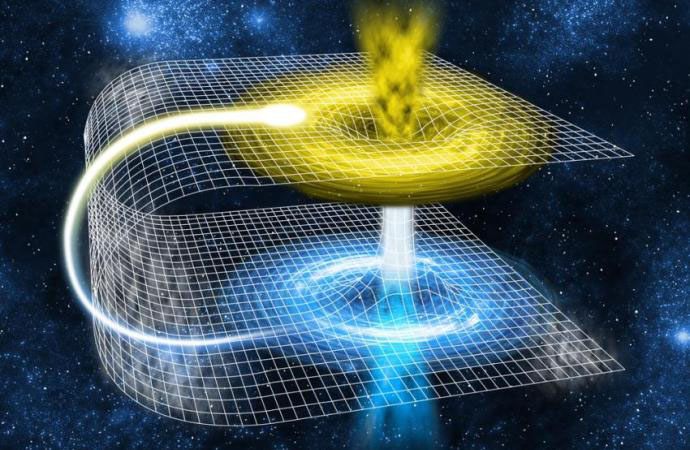
Aright, so let's go over the limits of the Jump Gate:


  • The Jump Gate has to be big enough for the ship to pass through it completely. This limits ship design dimensions that intent to use a Jump Gate rather than their own jump drive.
  • Jump Gates require a massive amount of energy; each jump gate has a series of reactors as well as several back up reactors in case one fails.
  • Powering up a jump gate takes several minutes for the reactor to build energy and momentum to create the jump field within the gate ring.
  • Jump gates can remain open for some time, allowing several ships to pass through to one destination. To change destinations, or after 10-15 minutes, the gate must power down, re-orient itself to a new target point, and power up. 
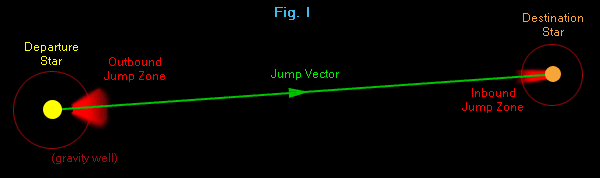
  • Jump gates can only reach a certain number of points in nearby systems, where gravity fields are low enough to create an arrival point.
  • Once a ship starts passing through the gate; it has to complete the jump. In the rare instance a jump gate destabilizes while sending a ship through, the ship has almost always been annihilated (scattered across space near the jump gate and at the arrival point)
  • You cannot jump into orbit near a planet, nor into the atmosphere of a planet. Gravity distorts the arrival point and the ship is destroyed (like an egg hitting the windshield of an oncoming car) 
  • Attempting to jump to a point farther than possible will result in the ship emerging from fold-space along the vector of the jump. Quite probably in the middle of nowhere. How far a ship makes it to the intended target point will depend on the mass of the ship (the higher the mass, generally, the farther it will get)

Now, how are jump-drives different:
  • Jump drives are a lot riskier to use, as the ship can generally only have enough reactors to power the jump drive with few or no back-ups.  If a reactor fails, the ship is stuck.
  • Jump ships can generally get a lot close to a planet than a ship sent through a jump gate; because the jump ship is able to stabilize it's jump field throughout the jump. The jump field can cancel more gravitational effects at the arrival point, but it's still very risky to do so. Ships can become damaged by a miscalculation at the intended arrival point. 
  • A ship cannot, or at least should not, power up it's jump drive while attempting to use a jump gate; the two fields create a dissonance that will destroy each other (and possibly cause a quantum singularity). 
  • To use a jump drive, emitters are extended from the ship's hull to create the jump field the ship will pass through. These emitters are usually well armored, but are vulnerable to attack. Destroy enough of them and the jump field will collapse with possible catastrophic results for the ship attempting to jump (see "Once a ship starts passing through a gate.." above)
...yeah, I think that'll do nicely.

Aright, time to work on tomorrow's post; Mood II.

Thursday, September 15, 2016

Day 15: Resources

Sweet christmas; I'm half at the half way point of this escapade. I don't want to say I didn't expect to be this consistent, but I am pleased that I seem to be making progress.


I gotta admit, when I saw the title of today's exercise, I was expecting "economics" and "commerce".  I wasn't expecting this...
Check out some of the websites that relate to your novel, and pick out a book or two that you plan to read, either between now and when you start writing, or to flesh out your world after you've written your first draft.
Today's task includes a host of links to websites and books as suggestions to peruse for ideas in fleshing out the world.

I can certainly do that; but sadly, I seem to be at a loss for links to webpages.  Many of the links on the "Day 15" page are no longer active. One link that looked interesting is gone;  Joan Slonczewski on the science in science fiction.  It takes you to a "404" page on the SFWA.  That's not very helpful.

These books look intriguing if I can find them...
  • Writing Science Fiction and Fantasy Includes a chapter called "The World-Builder's Handbook and Pocket Companion." 
  • The Writer's Guide to Creating a Science Fiction Universe by George Ochoa and Jeffrey Osier. Another good one for physical world-building, defining where the mountains belong, etc. 
  • The Borderlands of Science by Charles Sheffield. Gives a really good overview of science and where scientific knowledge has reached its limit. 
  • A similarly-titled book The Borderlands of Science: Where Sense Meets Nonsense by Michael Shermer explores the boundary between science and pseudo-science. 
And that's pretty much it for today; research. Kind of a boring day, for you the reader at any rate.

This marks the mid-point of the process; looking forward to the next 15 days, I see a lot of nitty-gritty details getting fleshed out.  I'm going to do two days tomorrow (although I'll set one to post on Saturday), and on Monday I'll write Sunday and Monday's blog post. I don't have time to write all three tomorrow (hell, I'll barely have enough time to write two).

Wednesday, September 14, 2016

Day 14: Education

Another oddy but goody today; this exercise discusses what the people in the campaigns setting know, or how they learn it. The Education exercise looks at what kind of educational system exists within the society.

So, what kind of educational system does your society use? Do apprentices train in a particular trade before graduating to journeyman or master level? Does a child learn the profession of its parents? Do churches or religious institutions educate the children, and if so, do they educate all children, or just the religious or wealthy ones? Are there colleges and universities for advanced studies? Do students learn in a virtual reality world, and if so, do they have the same kinds of conflicts they might encounter anywhere else?
I'm going to stick with The Union, since that's the political faction that the campaign (mostly) centers around. It's certainly from where most characters will be haling from. The Union is an amalgamation of member worlds, so each world may have it's own education path for its citizens. I get the feeling that the Union as a whole has a sort of standardized testing. You have to have an education from an accredited Union Academy to conduct interstellar business, work on a planet other than your own, or hold office on anything more than a planetary level. You could get around this by joining the military; anyone who wants to join The Union military is taught facts and ideas that are to be memorized. The military does it's best to create "good little soldiers" who are loyal to the ideals of the Union and are not taught to question orders or let luxuries like "morals" get in the way of them.

I'm not sure how feasible this is, though. With 19 worlds of resources to try and manage, could the union really afford to enforce such an education requirement? Probably not, meaning that on several worlds the manufacturing, mining, and farming operations are all going to be trade-based apprenticeships. Those trades form guilds which operate within the Union; likely by having guildmasters or trade-councils that are Union educated and can navigate the Union's red tape to get the best deals they can for their workers. Without such an education, the Union could walk all over them. Given that, it seems more likely that the Union would discourage higher education from certain worlds while requiring it in others.


I think I'll settle for something in the middle; a Union education is going to be a proverbial golden-ticket to riches for anyone within the Union, but it's going to be difficult to obtain. Only the wealthy can afford it, or it could be obtained through scholarships to individuals who show some exceptional ability in a field the Union needs. A formal education is also a reward for anyone who joins the Union Military (like the G.I. Bill); serve a specific number of years and you will get a full scholarship to a Union Academy.  How many years?  Probably something high like 8 or 10 years.  Maybe even longer; it is a full scholarship after all!

Yeah; the Union is getting more and more dirty by the day...


Tuesday, September 13, 2016

Day 13: Plot Hooks

Big thanks to everyone who has asked me "What if" questions in relation to yesterday's blog post. I answered a few, and will answer the others that were asked. If you have another "what if" question, feel free to go back to Day 12 and ask it.

On to today's exercise...

If you have some idea of your plot by now, get out whatever plot notes you have and write down ten things (minimum) that your speculative element can do to your plot.

Example: In a magic world, traveling across a continent doesn't *have* to take weeks. In an advanced biotech world, maybe people don't have to die. What does that do to a quest fantasy in which the travel portion leads the heroes into more adventures? What does it do to the villain if he cannot die? Or the hero?
 If you don't have any ideas about your plot, but you do know what kind of speculative elements you want in your [campaign setting], that's fine. Just look at your notes for that element and start asking yourself "what could I do with this element? Can I have my hero or villain use it? Refrain from using it? Is it a threat? A convenience? Both? What happens when it fails?Does it change some ubiquitous thing, like a technology that makes communication instantaneous, or a supernatural force that eats people in the dark (therefore making candles and lanterns necessary and commonplace).
My Faster-Than-Light mechanism seems to have spurred the biggest discussion, so that's likely a good place to start. I've only got the bare-bones idea about the first story arc, so I think I'll be better served by asking myself "what can I do with a Jump Drive or Jump Gate?"


  1. Attack a gate to prevent reinforcements from being sent to another system.
  2. Attacking to control a gate is a valid and accepted tactic of war. Intentional destruction of a gate is considered a war crime due to how vital they are for interstellar stability. Even the Drachon Clans shun such a tactic.
  3. Mine or ambush of a known arrival point is a questionable and dishonorable tactic, but it is still used during times of war.
  4. Jump Gates are controlled by the nation who built them, so someone trying to use a gate without authorization would have to take the command center or somehow hack the gate controls remotely.
  5. Theoretically, a gate could be made in a uninhabited star system and used to send ships to an unknown arrival point in another system
  6. Jump Drive failure could result in destruction of the drive or the ship. Jump gate failure could result in a failed jump, destruction of the ship, or possibly even the creation of a quantum singularity (which would be exceedingly bad for everyone nearby).
  7. Jump gates are necessary for interstellar communication. One-way messages between systems are possible only through the jump gate stations and jump gate buoys; which are placed at arrival points within star systems. Without the buoys at the arrival points, messages sent to the system from another jump gate could not be received.  This would allow the possibility of someone destroying or moving a buoy and parking a communications ship in it's place to intercept incoming transmissions.
  8. Jump gates are necessary for interstellar trade. Many colonies on many worlds would fail without a constant supply of some needed resource (food, water, consumables, materials), while other planet's economies would fail without the income generated by those exports.
  9. Not everyone handles the journey through space-time well. Some people have varying degrees of jump-sickness; nausea, migraines, hives, asthma, sometimes even stroke or (in rare cases) death. It's almost always an "all or nothing" thing, meaning if you don't get jump-sickness you would never develop it later. No species is immune to it either, almost every race has a similar percentage that gets jump sickness.
  10. Some scientists have theorized alterations to the space-time equations that govern Jump technology. They theorize that by changing the space or time constant, the other variable would be affected; meaning by changing how long a jump takes, the distance jump could be affected (a ship jumps farther in a single jump, but it takes minutes, hours, or days before it arrives at the arrival point). Alternately, time could be folded more than space, and a jump through time could be possible. Research on the "long jump drive" is underway by a few corporations for the Union military, but all research on "temporal jump theory" is in a theoretical stage only (no practical temporal jump drives or gates are in development).

 ...oh yeah, I think those ten will do nicely...

Looks like tomorrow I go back to school, where we see how much people know in The Garden. I've also got to start making plans for the weekend; I'm going to be AFK for Saturday and most of Sunday, so I might have to write a couple days ahead of time, or make up for it on Monday (which I'm taking off from work).

We'll see how it goes.

Monday, September 12, 2016

Day 12: What if?

Science! Magic! Psionics! Divine Intervention! A Jedi craves not these things, but your average adventurer in Trinary will probably want one (or a few) of these in their back pocket.  Today we're talking about "Speculative elements" in my campaign setting. Bryant instructs me to proceed with the following exercise; I'm going to break it down into digestible sections:

So, settle in with your notebook. If you don't know yet if you're writing science fiction, fantasy, or horror, you should probably decide now (and yes, a blend is a-ok; just be sure to do all the speculative element exercises once for each genre). But the chances are, you have some idea already of which genre(s) you want to work in. You might even have some specific ideas to play with-- a talking octopus, for instance, or a magically-appearing cat.
Ain't got a notebook but I hope a blog is okay...

Trinary is a setting where super-science is known and widely used; we have energy weapons, faster-than-light travel, power armor, robots, mecha, and huge starships. It's also got psionics; the Bathal are powerful psychics and will prove to be a dangerous foe, but they're not the only ones. Some of the races in The Garden are psychic; albeit at a much smaller percentage of the population than those of The Host. The Host have one weapon no one else seems to have; divine magic. Their theocracy is empowered by their belief in "The Dark One", and she grants miracles that can only be described as "magic". Blessings and miraculous healing are but two of the ways these powers manifest, but there are others.

Finally, there are rumors that someone saw a guy on Danal shooting lighting from his hands and flew around without any sort of apparent jet pack; but that's just crazy talk...
Write down the snippets and images that you already know you want in your story. Some of these might be things you have already decided on as convenience items-- a faster-than-light drive, maybe, or telepathy; things you want in there to help drive the plot forward and eliminate certain inconveniences as a storyteller. Just remember that these convenience items are always available; it's implausible to have the spacetime drive fail just when the hero needs it, and these things ought to be available to the villain, too, just so your heroes are playing on a level field.
Science:
  • FTL travel via jump gates and jump drives
  • Ku'jai Excrement from Danal can be used as a booster to Jump Drives, enabling smaller ships to jump without the need for a gate
  • Clunky mecha (More Battletech, less Gundam)
  • Power Armor
  • Some energy weapons, but ballistic weapons most common
  • Arcologies are the norm, rather than urban sprawl
  • Psionics; telepathy, empathy, bio-manipulation, psychic weapons, telekinesis, clairvoyance, and possibly some high-end powers that allow for manipulation of space-time (i.e. teleportation)
  

Magic:
  • Initially, divine magic only as granted by the Dark One to the Bathal
  • Actually is magic in the setting, but only accessed by a select few
  • Some sort of council of wizardry like in Harry Potter or (more accurately) the Dresden Books to police magic use and keep it under wraps
  • Leads to plotlines about "what is magic?", "where does it come from?" and "why can the Bathal use it openly?"
Next, ask yourself the hard questions. "What if?" What if my society could talk to each other instantaneously? What would that do to them? Would that change my plot? What if you could make yourself invisible? Would that require magic, or technology, or both-- and how would you do it with either?

Last year, I knew I wanted aliens and a network implant (like having the Internet in your head); as I played with all my "what ifs," I realized that the network implant wouldn't just change the big things, like how dangerous a hacker could be-- it also changed the little things, like very few people carrying a briefcase or cell phone, and how you always would know where you were and could never get lost.
Drill down on the big things and the details, decide what would happen if they work one way vs. another. Chances are, you'll find there are speculative elements that you need in your story to support or limit the power of the ones you've already created.
This is odd; I'm having a hard time trying to come up with these "What Ifs?". So let's start with the big one; faster-than-light travel. The cornerstone of the galactic economy is the ability to physically transport yourself between worlds light-years away from each other. Various cultures in The Garden figured out the calculations and power required to fold space and transition from one location to another. There are a couple key points I want to make "facts" for the jump drive;


  1. The more gravity neutral a region is, the easier it is to jump there. This will create "jump points" in each system where the first jump gates were built.  It will also restrict the ability for ships to just jump in anywhere in a system; only the most powerful jump drives could jump into planetary orbit over a planet, and the energy expenditure would be astronomical.These jump points would also be known destinations that could be patrolled. Space stations or large ships would serve as customs depots, fighter patrols and destroyers could monitor arrival points from the Drachon clan worlds, and smugglers would be eager to locate new jump points and keep them secret.
  2. Jump drives have limited range. The calculations and power of a jump drive are limited; only so much space can be folded over to connect two points in reality. I'm thinking something like 25 light-years for the average jump distance, with 40 being the absolute maximum (and reckless to attempt). This would create travel routes to get across the Union, jumping from one star to another. Not every system connects to every other, so to get to one only 30 light years away, a ship might need to take a route that takes it five times that distance, just because there's no good, safe route on a straight shot.
  3. Ku'jai additives are power boosters for jump drives. Something about the Danal bio-system and the ku'jai makes their droppings incredibly potent when refined and added to the fuel for a Jump Drive. Normally the power output needed for a ship to create it's own jump point can only be performed by large ships with massive reactors. Smaller ships (anything under 500m) simply can't devote the amount of space needed for such a reactor. When ku'jai droppings were studied and a refined fuel additive was developed, it allowed for ships the size of civilian shuttles (and military bombers) the energy output necessary to create a jump point. The military applications were obvious, but even the civilian market received a big boost. Smaller shoulds could now be owned by corporations for rapid transportation of goods and personnel. Overnight shipping between systems became possible (albeit expensive). Corporations always had a couple jump-capable ships available for the benefit of their executives, and several exclusive passenger carriers appeared to transport the ridiculously wealthy between the stars. The ku'jai ranchers who exploited the system became rich, while those who cared more about the ku'jai's well-being fought against the increasing Union control over their operations. Vast amounts of land were devoted to ku'jai grazing fields, and the ku'jai overpopulate Danal. This led to the Danal Revolutionary War, as the Union took control of more and more of their world "for the benefit of the Garden as a whole", when in reality the ranch operations mostly only benefited the ultra-rich and the military.
I think that's a lot, and all I really have time for now.

By the way: I personally find that talking about my story with someone else helps me find the holes in my spec element. For the past week, my husband and I have been playing "what if" with my dinosaurs, figuring out what needs to change in their physiology to make them able to cooperate with each other as a society, and discovering that having twelve sentient species of dinosaurs means a very complicated society indeed.

This one I can attest to; the whole "excrement as super fuel" was a result of bouncing ideas off my buddy, Alex. He's been a constant "idea wall" and continue to utilize him to this day.

I'm going to need to come back to this exercise frequently, there are a few things that deserve this sort of pass.  Tomorrow is another of those days where I have to decide how much I'm going to share. Some things need to be presented to all as backstory and world setting, and somethings need to be kept in secret to not give away the overall storyline to soon. We'll see what comes to pass tomorrow when I deal with Plot Hooks.

Addendum:
Folks who are reading this series; I need a favor.

I'm having trouble coming up with my "what if's", so if you're following along, ask me something about the "speculative elements" of Trinary. For example, someone just asked how interstellar communication worked, and it spurned a solid couple paragraphs of response.

So give me one question or one "What if" in the comments section below, if you please.

Sunday, September 11, 2016

Day 11: Focus In

So yesterday, I got a preliminary lock on the tone, mood, and evocative theme I want Trinary to convey. There are a lot of components to today's task, so lets just jump right into it.

Today's exercise is to expand on one area of the culture you've created for your world. We have a bare-bones timeline, the bare-bones elements of a language, the bare-bones of an economic and political scene. Today, select one of these areas to flesh out. If you're writing a novel with a more political plotline, flesh out the politics and economics. If you're writing something really "alien" in feel, or if you're writing high fantasy, flesh out the languages. If you're writing a story whose plot hinges on the past, fill in your timeline (probably not needed if this novel is a sequel, though).
You know what? Today is a Sunday, I got the time; let's work on them all (or as many of them until I get distracted).

History
Write a complete timeline for your setting (last 500 years or so should do, unless your characters are long-lived or major forces earlier than that are truly world-shaking) and for your protagonist's life up until the novel opens. Make notes on how these forces will later impact the story (ex: Expansionism one hundred years ago is going to lead now to revolt in the Islands; the hero lives there and is going to get caught up in the revolution).
500 years? Man, that's a long time. I need to take into consideration when technologies were developed and when planets and races were discovered. Hell, I need to finish figuring out the majority of the races to begin with. I'm going to go over this later...

Economics/Politics
Write a 1-paragraph description of each major political body (churches, governments, kingdoms, factions, economic forces, guilds, etc.) and name them now so you can refer to them as needed later. If you want, take extra time and write one sentence about how 3 of your groups (the 3 most important groups) feel about all the other groups.
Aright, this one is a little more useful.  Let's start here, and start with "The Union". I sort of want to call them "The Garden Union", but that just sounds lame. "The Stellar Union" is a little better. "The Nebula Union" is just clunky. The seat of the union lies on the planet Kel, so I could simplify it and call it "The Kel Union". That would fit more with the mentality that the humans of Kel are the driving force behind the Union. I feel like they're shooting themselves in the foot though, and that someone would have pointed out that a more generic name would entice more worlds to join. Maybe instead of "The Stellar Union", it's called "The Galactic Union", but is that too presumptuous for a political alliance that's from a region only tens of light-years across? Man, names are hard...

AH!  I got it; the Union of Garden Worlds.

Interchangeably known as the Garden Worlds Union, the UGW was formed years ago when the Kel Colonies entered into a formal treaty with the N'guli of Baram to counter the threat of the Drachon Clans. The combined efforts of both naval forces provided the Drachon clans with enough of a fight to blunt their attacks outside of Clan space and hold them back. Since then. the UGW has spread across the Garden, petitioning individual worlds to join the Union while being petitioned by others.

At this time, 19 systems within the Stellar Garden are members of the Union. 5 worlds are on the Union Council; Kel, Loros, Baram, Corbak, and Kaval. The Prime, the title for the executive leader of the Union, is elected every 5 years from one of these worlds. The other 14 worlds (along with the 5 worlds of the council) elect three representatives to form the Union Parliament.


The Danali Revolutionary War
The relatively short amount of time since it's formation, the UGW has undergone some growing pains. The economic and logistic requirements of governing 50 billion beings across 19 star systems is incredible.  As such, there have been several decisions and policies put into place "for the good of the Union". This has included the authorization for strip-mining worlds and seizing other natural resources that are needed to keep the Union functioning. Several years ago there was a Revolutionary War with Danal, a former human colony world. Danal was important to the Union because it was the only planet where a large creature called ku'jai thrived. It was discovered that the excrement from these large beasts could be used to fuel jump-drive engines. The would allow ships to be able to trigger a jump-drive without the need of a jump gate, something that until recently was only possible by massive jump engines carried by the largest jump ships. The ku'jai could not survive on any other world (the Union tried), so the Union took control of ranching operations on Danal to the objection of the native ranchers. Eventually the objections of the Danali people became protests, the protests became riots, and the riots became an out-right revolution that lasted for several years. It ended with the defeat of the Danal Army, allegedly as they were trying to release a planet-wide toxin that would kill the entire ku'jai population. The military and political leaders of Danal were captured, tried, and executed for crimes against the Union. To this day, ranching on Danal is a Union military controlled operation and the people of Danal suffer from constant distrust and scrutiny from the Union.


The Union Calendar
After new common calendar began, with the date of the Union's formation as the first of the year. By that calendar, it is now Year 59 of the Union Era.

It's funny how that sort of snowballed there; I ended up writing a bit about the Danali War, and gave some background into how folks get around the Garden. It definitely became more than a paragraph.  Let's see if I can tone it down a little for the next two...

The Drachon Clans

The clans hale from five worlds in the Stellar Garden, each world belonging to one clan of the same name; Cragar'rus, Arc'tus, Tira'nus, Infirg'nus, and Vas'tus. The drachons are a warrior culture, they display their dominance over all others through combat. The clans frequently take territory, but they rarely hold it for long. It's not that they can't; it is glorious to be a warrior on the front lines of battle in the thick of combat, but the average clan warrior becomes bored with the effort needed to garrison captured territory. The 5 clans rarely trade or conduct commerce with each other, but they do meet annually in great moots to extol on their victories since the last moot and to form a general plan for attacks in the coming year. The leader of these coordinated assault come from the clan that was most successful in the prior year, measured in "claw marks".  The clan with the most "marks" is the "Grand Clan" for that year.

That paragraph gives me some awesome plot ideas concerning claw marks, coordinated attacks, and places a Clans could conquer that someone would attack in an attempt to retake it.

The Bathal Host
The Host rule a vast galactic empire that controls more than half of the Vortex Spiral Galaxy (of which the Stellar Garden of Ulmac is a part of). They have recently become aware of the denizens within the Stellar Garden and are moving on the Garden to bring it under control of The Host. The Bathal are religious zealots who's faith is drawn from a being they call "The Dark One". The Bathal possess previously unheard of powers that they refer to as "blessings" from their dark goddess. With these unusual abilities and their bio-organic technology, they plan to sweep aside resistance within the nebula with ease and purge its systems of the "heretic infestation".

The arrival of the Host is going to start the Trinary setting, or at the very least the first campaign.

The Timeline
As I was going through the above points, I had thought about moving back the Drachon attacks and the Union formation 100 years, to give it a sense of history and establishment.  I then decided against it; I want the Union to be a fragile thing, to be a political entity that's stumbling and trying to figure out how it works. It made a harsh choice with it's handling of the Danal Revolution, one that set the tone for policy going forward and may have alienated several potential members (and current ones). Finally, it gives the players a social playground to romp in, as they could be contacted by various factions within the Union who want to fix it (or make it worse).

Tomorrow looks like it is actually going to draw a bit from today's results; it's all about the "What if"?  Not like Marvel's What if comics, where history goes differently. It's the assumption of what is not true in present day Earth.

I've got a grocery list of those to put in here...

Saturday, September 10, 2016

Day 10: Mood and Culture

Today is a bit of a heavy exercise; it doesn't really sum up very well. It involves referencing the results of Day 3, and Days 6-9. Basically, it's about having them all line up together and make sense, and tweaking or removing anything that doesn't.

I recommend going over to Bryant's website and reading up on Day 10. To try and sum it up, here's today's task:

Settle on the overall mood for your story if you haven't already. Look through your timeline, political groups, and language notes and mark for revision anything that doesn't fit your mood. If you have time, revise those things. Otherwise, leave them for later.
So let's start with the mood and setting I'm trying to present, back from Day 3. This led to several climates that matched with these moods.

Oppressive: Tundra, Bayou, Badlands
Monolithic: Rocky Mountains/Alps, Ocean
Energy: Urban, Savannah
Defy: Settled on Urban, Outback, Volcanic, Marianas Trench. Upon further consideration, asteroid bases, colonies on barren planets, and space stations near stellar hazards work too.

Thinking on it, this is a pretty monumental task. I'm about to settle on the mood and tone for an entire campaign setting. Not just a game, but the whole damn setting.

Bryant has a tip for this heavy decision...

Having trouble really identifying the mood again? Finding that your mood and your language don't match at all?
Take a deep breath and think "When I read this story, I want to feel....." what? Amused? Thrilled? Important? Angry? Frightened? Dark? Confident? Angsty?
When I present this campaign setting to my PCs, and anyone else I want to share this with, what are the themes I want them to feel? When a PC plays this game, I want them to feel heroic. I want them engaged. I want them to feel intimidated, but also defiant. I want them to desire a better world, a better life, which means I need to give them a world that needs improving.

I think The Union is not going to end up being a United Federation of Planets analogue, I think they're going to end up more like the Terran Dominion from Starcraft, and arcing somewhat closer to the Galactic Empire from Star Wars.  Maybe they started like the Federation, but politics and ambition got involved. This logically means that there should be an alternative for the players to support. Alternately, there could be something the players could create to combat the Union.


But then we've got two other forces at play that the Union is really needed to hold back; the Drachon Clans and the Bathal Host. The clans are formidable, they're entire planets of warriors who are spoiling for a fight or at least to prove themselves at almost every waking moment. The Bathal Host is on a different mission, to purge heretics from the cosmos and spread the power of their Church. Given those two threats, many planets signed on to The Union, which gave the Union more power and influence. Vicious cycle, and all that.


I think everything lines up for now; I feel like it's all in a good spot. I've got a mood and setting that aligns with my culture and language; maybe not perfectly but enough that it's only tweaks and adjustments rather than full re-writes. This mood will affect everything going forward; Trinary isn't going to be a nice place, but it's ultimately worth saving.

Tomorrow looks like a really creative day; where I'll be focusing in on one or more aspects of Trinary.  Maybe I'll work on a few more than the exercise states, since it's a Sunday and I'll possibly have the time.

We'll see.